You've bought a car or vehicle and it doesn't work, despite your best and repeated efforts to get it repaired. You might have a lemon on your hands. Under state lemon laws, automobile manufacturers are required to either replace the defective vehicle or reimburse you, but you will need to pursue a lemon law claim.


How do you pursue a lemon law claim?


1. Determine if California's Lemon Law covers your vehicle.

The Lemon Law in California covers cars, pickup trucks, vans, and SUVs, as well as parts of motor homes. It covers new vehicles, as well as used vehicles if they are still under their manufacturer's warranty. Vehicles can be either purchased or leased and can be used for personal or business use, under certain circumstances. The Lemon Law will not cover used vehicles that have not been in for repair of problems under a manufacturer's warranty, vehicles like off-road vehicles that are not registered under the California Vehicle Code, or vehicles that have been abused by the owner.


2. Determine if the problem you are having with your car is covered by the California Lemon Law:


  • The problem has to be covered under the manufacturer's warranty.
  • The problem must reduce the use, value, or safety of the vehicle, and cannot have been caused by abuse.

3. Make sure that you have met the statutory guidelines for attempting to get your vehicle fixed.

Lemon Laws only apply when you have given dealerships a "reasonable" number of repair attempts. In California, this usually means you have taken your car in for repairs at least 4 times for the same problem but it is still not fixed, your car has been out of service or in the shop for 30 (non-consecutive) days, or you have tried at least twice to get a safety defect likely to cause death or serious bodily injury fixed. If you have met these criteria, you might be entitled to replacement or refund for your vehicle under the California Lemon Law.


4. Make sure you are as detailed as possible when describing your vehicle's defect to the dealer when you take it in for repairs.

Describe every possible detail, such as when specifically the problem occurs, how often it occurs, and any associated noises or smells. It may help to keep a log in your car so that you can accurately describe the issue to the dealer. When you take the car in repeatedly, describe the problem the same way each time. If the manufacturer later argues that each repair attempt was for a different issue, you might not qualify for relief under the lemon law.


5. In order to prove that you have made a reasonable number of attempts to repair your vehicle, make sure that you keep detailed documentation of all repairs.

While the dealer might try to perform different repairs to fix your car, you need to be able to establish the same underlying defect is causing the problem.


  • Before you sign the work order for each repair, ensure that the service technician has included all the details you have described to him or her.
  • When you pick up the car after each repair, ensure that the documentation from the dealership describes all the work performed and includes any parts that were replaced during the repair attempt.
  • Ensure that all paperwork is properly dated and shows how long your car was out of use and in the shop.

6. If your dealer fixes different problems with each repair but there are still issues with your car, you may still qualify.

You may qualify for a refund or replacement under the lemon law by showing that your vehicle was out of commission or in the shop for 30 or more days. The days do not have to be consecutive, but make sure you have detailed records of when your car was in the shop or not working.


7. Make sure that you have all the required paperwork to make your claim to the manufacturer.

You will need to have certain paperwork to pursue your claim, including your purchase or lease agreement, all warranty information (including extended warranties if purchased), and all the bills, invoices, and receipts you have for your repair attempts. You should also gather any notes you made about conversations you've had with service technicians at the dealership or with the manufacturer. Make sure you have copies of all written correspondence you've had with the manufacturer and dealer.


8. Once you've gathered all your documentation, you can submit your claim to the manufacturer.

They can either offer you a refund or replacement or deny the claim by asserting the vehicle does not qualify as a lemon under the law or that the car was not repaired under warranty.


9. Hire a qualified and experienced California Lemon Law lawyer to increase your chances of success and make sure that you recover what you are entitled to under California law.

An attorney will help ensure that your claim is prepared correctly so that your claim is more likely to succeed. Additionally, if your claim is denied, an attorney can still help you obtain a favorable result by filing a lawsuit with the proper court. Contact us right away to schedule your free consultation.


Car IconFremont

Lemon Law Attorneys

Over eleven percent of Fremont’s workforce commute to work. That’s fortunate because traffic during rush hours is stop and go – at best. Ninety percent of Fremont’s households own at least one vehicle. Vehicles, obviously, are vital to life in Fremont.


Car problems are much more than an inconvenience. A reliable vehicle is a necessity. No one should have to deal with the stress and frustration of a vehicle that doesn’t do what the manufacturer promised it would. California’s Lemon Law can bring relief.


The Gayle Law Group PC has over twenty years of success resolving Lemon Law cases on behalf of Fremont consumers. We have dealt with every brand, make, model of gas, electric, and hybrid vehicles; motorcycles; trucks, and RVs.


Our founding attorney, Liz Gayle, has worked on both sides of the consumer products fence. Her first twelve years as a practicing attorney were spent ‘on the other side of the fence’ - she represented product manufacturers (including an automobile maker) before devoting herself to consumer law. That experience makes a difference.

The California Lemon Law

Lemons have been around for as long as cars have been mass produced. Faulty designs, a bad part, a robot that is just slightly off, a car plant with systemic problems. They all add up to vehicles that are sold but don’t deliver what the consumer thinks they are paying for. For far too long, there was no recourse for car buyers and lessees. Then, in 1970, California became one of the first states in the nation to rectify that. The California Lemon Law was enacted to provide drivers with relief from persistent problems with their vehicles.


What exactly does the Lemon Law do?

If you leased or purchased a new or used vehicle in California that is under a warranty and has a problem(s) that a dealer has repeatedly failed to repair, you may qualify for compensation.


The California Lemon Law applies to cars, trucks, vans, SUVs, RVs, motorcycles, some business-owned vehicles, and boats. Both purchased or leased new vehicles. It also protects used vehicles that are certified pre-owned and/or still under a manufacturer’s warranty.

Warranties

The Lemon Law only applies if the vehicle is under a manufacturer’s warranty. There is always some confusion over this requirement. Simply, cars, trucks, and the powertrain portions of motorhomes are covered by the Lemon Law if:


  • he vehicle is new, used, pre-owned or certified.
  • You bought or leased it.
  • When you bought or leased the vehicle it was covered by the manufacturer’s warranty (or portion of), or a manufacturer’s extended warranty.
  • The vehicle might qualify out of warranty, if it had an ongoing problem that required it to be in the shop several times before the warranty expired.
  • The manufacturer has had a reasonable number of opportunities to repair the defect.
  • Or the vehicle has been in ‘the shop’ for more than thirty days, cumulative.

Motorcycles, the coach portion of a mobile home and towables (fifth-wheel trailers, toy haulers, travel trailers and pop-up campers) are covered as consumer goods. They enjoy the same protections as all consumer goods sold with a manufacturer’s warranty.

What is a Lemon?

There is no single or easy answer. The Lemon Law requires both a substantial defect and either that the vehicle is not repaired after multiple attempts to get it fixed or it has been at the dealership for many days cumulatively.


Substantial defects impair the vehicle’s “use, value, or safety.”


  • A defect that affects a vehicle’s use is one that prevents you from driving the vehicle as it was intended to be driven.
  • A vehicle’s value is diminished when the defect means the vehicle won’t sell for the price it normally would bring - if the defect weren’t there.
  • Safety defects are defects that put the driver, passengers, and other drivers in danger.

Your problem does not have to be safety related to qualify. Most safety issues are obvious – at least to the driver. Stalling on the highway, vibrations from the brake pedal, a transmission that ‘catches’ or ‘lags,’ and an engine that keeps running hot are safety related issues.


A heater that never works, an air conditioner that intermittently blows hot, or a door handle that doesn’t function despite repair after repair all qualify as substantial.


The vehicle is not repaired after multiple attempts. You bring your vehicle to the dealership repeatedly and you leave the shop with the same problem. There is no need for you to put up with this seemingly endless cycle for long.


watt

A common myth states “if you bring it in four times, it’s automatically a lemon.” It’s not necessarily true. The law only specifies that a ‘reasonable number of repair attempts’ are made. If a defect involves a safety issue, such as faulty airbags, it may only require two repair attempts. If the vehicle has been in ‘the shop’ for more than thirty days, cumulative, regardless of the defect(s), it may also qualify as a lemon.

Vehicle Defects

Motor Vehicles today are better built, safer, and more integrated than ever. In 2020 8.8 million vehicles were manufactured in the United States alone. It's inevitable that something will go wrong somewhere along the way. Design flaws, factory mistakes, faulty computers, a supplier’s error.


The average 21st century gas powered car and truck has over 30,000 parts. From nuts and bolts to brake pads to computer motherboards and Wi-Fi routers. There are at least 2,000 moving parts.


The Gayle Law Group, PC has watched vehicles become ever more sophisticated and complex. We’ve kept pace with every change, and we’ve had lemon law experience with all of them.

Common Vehicle Defects in the 2020s (so far)

  • Air bag defects.
  • Air conditioning.
  • Antilock braking system (ABS).
  • Automatic transmission.
  • Computer defects.
  • Electrical problems.
  • Engine fire.
  • Odors.
  • Paint.
  • Power steering.
  • Seat belts.
  • Stalling.
  • Sudden acceleration and surge.

Electric and Hybrid Vehicle Defects

Where gas powered vehicles have over 2,000 moving parts, electric vehicles have less than 20. That, however, does not mean that electric and hybrid vehicles have fewer problems. In fact, because the systems in these vehicles are so integrated, even a ‘minor’ problem can have widespread and lasting implications.


  • Automatic Backup Automation.
  • Battery Failure.
  • Braking System.
  • Computer issues.
  • Electrical System Malfunctions.
  • Failure to Hold a Charge.

Motorcycles

Motorcycles are ‘consumer goods’ and have the same protections as all consumer goods sold with a manufacturer’s warranty.


Every rider knows that what might be considered a minor defect in a car could be a serious safety hazard in a bike. Protections are there for motorcycle owners. No one must put up with a lemon.


What Makes a Motorcycle a Lemon?

Your motorcycle may be considered a lemon if:


  • The motorcycle you’re riding isn’t the bike as described in the warranty.
  • There is a ‘substantial defect’ that is a safety issue. Or affects your use of the bike or its value.
  • The motorcycle has gone to the repair shop multiple times and the problem persists.
  • You have not been able to operate the bike for at least thirty days. Note that motorcycle repairs take substantially longer than car repairs. Not being able to use a bike for thirty days or more is not uncommon.
  • You haven’t done anything to cause or contribute to the problem. Modifications, an accident, or neglecting regular maintenance void the warranty.

Common Motorcycle Defects

Common motorcycle defects that have led to Lemon Law claims:


  • Loss of power.
  • Defective head gaskets.
  • Defective fuel pump.
  • Stalling.
  • Cutting out.
  • Will not start.
  • Oil leaks or sprays.
  • Lack of power.
  • Electrical system malfunctions.
  • Sway.
  • No crank conditions.

Trucks

There are many myths and misconceptions about trucks and our Lemon Law. Because trucks have high safety ratings, are built to be rugged, are bought to be heavily used (sometimes for business use) many truck owners think the lemon law doesn’t apply to their vehicle.


It’s a misconception that leads truck owners and lessees to assume they have no recourse. Thankfully, the Lemon Law protects trucks that do not meet safety or other performance standards.

What Makes a Truck a Lemon?

If you bought or leased a truck with a warranty and for personal use, that truck falls under the California Lemon Law. If you bought or leased it for business, it is still covered provided:


  • The gross weight of the truck is less than 10,000 pounds.
  • The business has five or fewer vehicles registered in its name in California.

Like cars, trucks that fall under the Lemon Law are considered ‘lemons’ if they have a substantial defect that impairs their “use, value, or safety” and multiple attempts to fix it have failed.

RVs and Motorhomes

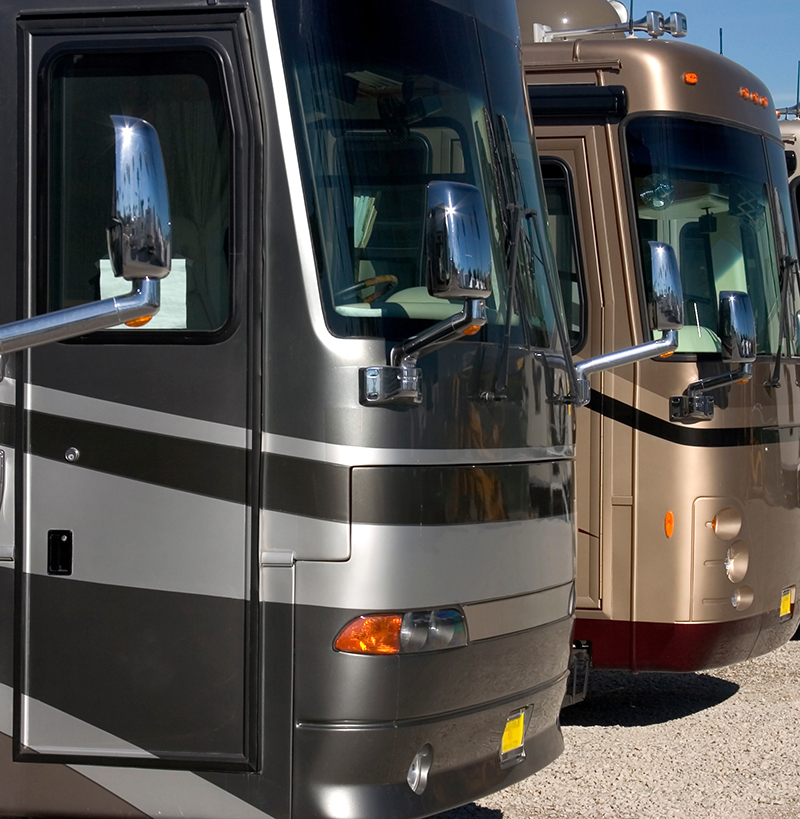
Recreational Vehicles and motorhomes represent a wide variety of motorized vehicles and ‘towables.’ Motorized RVs are Class A, B, and C vehicles. Some towables include fifth-wheel trailers, toy haulers, travel trailers and pop-up campers.


RVs, motorhomes, or trailers are major investments. Owners rely on them when they travel. Sometimes far off the beaten path.


A lot of things can go wrong. Families stranded in the wilderness, stuck in the desert, suddenly without water or plumbing, exposed to the elements, or, at the very least, forced to cancel vacations. It’s infuriating when your investment is in the repair shop more than it is on vacation.


RVs and motorhomes are covered under the California Lemon Law . . . but it’s a bit complicated. Towables are covered as consumer goods and have the same protections as motorcycles.


What Makes My RV/Motorhome/Towable a Lemon?

The chassis of a Class A, B, and C RVs fall under the Lemon Law. The coach is covered much like an off road unregistered motorcycle – they are considered ‘consumer goods.’


The chassis – engine, drive train, everything that makes the RV mobile - is a ‘lemon’ if it has a substantial defect that impairs its “use, value, or safety” and multiple attempts to fix it have failed.


Few attempts suffice when the defect is a serious safety issue: anything that puts the driver and passengers in danger. The RV may also be a lemon if it has been in the shop for an excessive number of days – even if the repairs were for different issues.


In fact, in the first 18 months or 18,000 miles (whichever comes first), if the defect remains despite your best efforts or there’s been a series of unending problems, the RV is presumed to be a lemon. Then, it's up to the manufacturers to prove it's not.


RVs and Motorhomes

The coach and towables – Simply, if you bought the RV or towable new, it’s under warranty, doesn’t perform like it is supposed to due to defects, you’ve tried to have it repaired and have been unsuccessful, the RV can qualify as a lemon.


Electrical and plumbing issues, tank leaks, hookups that consistently fail, slide-outs that won’t work, heating and air conditioning failures are all covered.

What to Do If You Think You Have a Lemon

Call Gayle Law Group PC and keep every document no matter how innocuous you may think it is.


You know what’s happening with your vehicle better than anyone else. You’re the only one who can document every aspect of what you are going through. You won’t get help from the dealership or manufacturer. You must be proactive; you’ll need to ask the dealership for the documentation you are entitled to at every visit.


Get the repair order and invoice every time you take your vehicle in and pick it up. Even if they have not or cannot fix the problem ‘that day,’ ask for the invoice.

Never allow them to leave your ticket “open” while a part is being ordered. Get an invoice then and when the part comes in and the work is done. Remember, every visit counts as a ‘reasonable attempt.’ Again, it’s up to you to get and keep accurate documents.


Make sure, even if you must step around to view their computer screen, that the service representative enters a ‘complete and accurate description of your vehicle’s problem’ as you’ve described it. If it’s not, correct them.


Don’t keep your service repair records in your glove compartment or center console.


Document all calls with the dealer and manufacturer; get the name and title of everyone you talk to.


When a dealer, salesperson, manager, or manufacturer’s rep explain any aspect of the California Lemon Law, pay them no mind. Even if you’ve been buying cars in Fremont from the same dealer for years. They are your potential defendants.

Remedies

The manufacturer pays all your legal fees and expenses when we bring a successful Lemon Law action. Some Fremont lawyers ask for retainer fees or have you sign a contingency fee agreement. The Gayle Law Group PC is paid by the manufacturer when your case is resolved. You are never responsible for any legal fees for our representation.


California Lemon Law remedies may include:


  • Purchase refund (including registration fees, the down payment, and financing costs) AND having the full balance of your loan/lease paid off in full.
  • OR a replacement vehicle.

Again, in addition, regardless of the solution, the manufacturer is responsible for attorney’s fees, costs, and expenses.

contact

Car IconCONTACT US

Call Us

The Gayle Law Group has represented a great many Fremont residents over the years. We’ve represented purchasers and lessees of cars, electric and hybrid vehicles, trucks, SUVs, motorcycles, RVs, and more throughout Fremont.